
5 Roof Warning Signs for Peoria & Vistancia Homeowners
You do not need to climb onto your roof to notice a change. Start with what you can see safely, record what is different, and arrange an inspection when a problem appears.
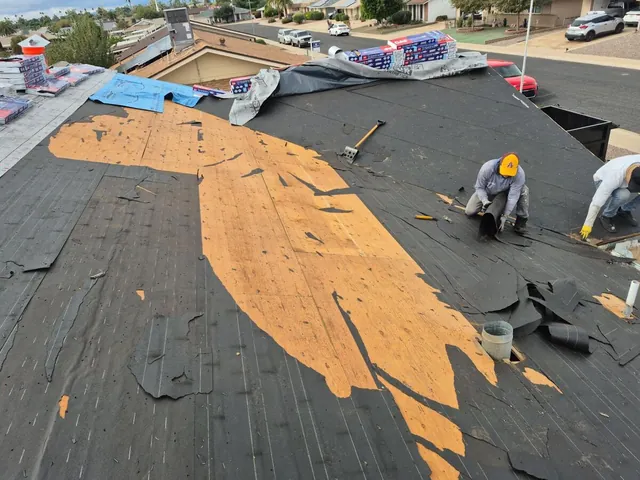
1. New water stains or an active leak
Fresh ceiling marks, damp areas, or dripping water need investigation. A stain is a sign to investigate, not a diagnosis: roofing, plumbing, or trapped moisture may be involved. Photograph the area and note when it appeared. Stay clear of water near electrical equipment.
2. Missing, shifted, or broken roof coverings
Look from the ground for missing shingles, displaced tiles, or pieces of roofing in the yard. Avoid walking on the roof to get a better view. A professional inspection can establish the affected area and whether the underlying components need attention.
3. Visible changes around roof edges and penetrations
Bent or detached flashing and damaged details around vents or roof transitions deserve a closer look. Take a photograph from a safe location and point it out during the inspection. A small visible change should be assessed in the context of the surrounding roof.
4. Sagging or a change in the roofline
An area that appears to sag can indicate a more serious problem. Keep people away from the affected space and arrange a prompt professional assessment. Do not go onto the roof or into an unsafe attic to check it yourself.
5. The same issue keeps returning
If a leak or repair problem returns, collect the earlier invoices and photographs. Ask for an explanation of the likely cause, the proposed scope, and how the recommendation differs from previous work. That creates a more useful conversation than requesting another patch without reviewing the history.
What to bring to an inspection
Prepare a short list of the locations, dates, and conditions when you noticed the problem. Include your roof’s installation date if known, prior repairs, and any warranty documents. Tell the inspector about areas that are difficult or unsafe to access.
These signs do not automatically mean you need an entirely new roof. The recommendation should follow the observed condition and documented extent of the problem. Ask for photographs and a written explanation of the repair or replacement options.
Further Reading
Have a question about your roof?
Tell us what you have noticed. We can inspect the roof and discuss the appropriate next step.
Get a Free Inspection